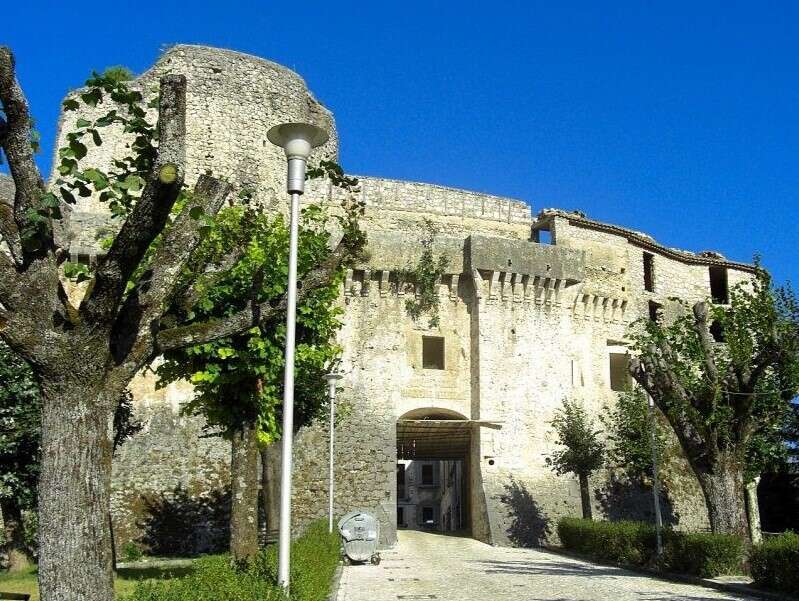
Castello Medievale
(English version below)
Il castello di Picinisco, con la cinta muraria, rivela fin dalle origini la sua funzione militare a difesa dell'area nord-est della Val Comino. Costruito nel 1054 dai due conti dei Marsi, Oderisio II e Rainaldo III, passò successivamente ai conti d'Aquino, ai Cantelmo e infine ai Gallio, che lo tennero fino all'estinzione della loro casata (1806).

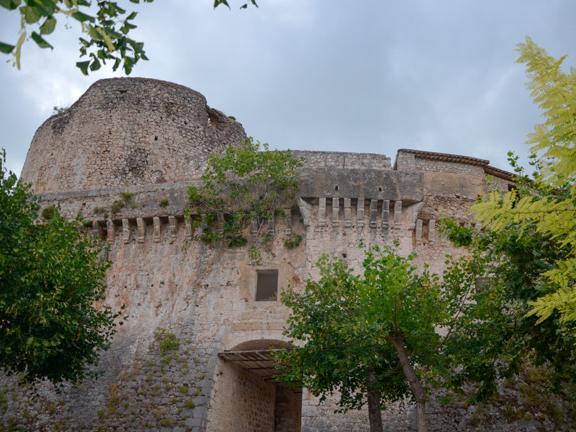
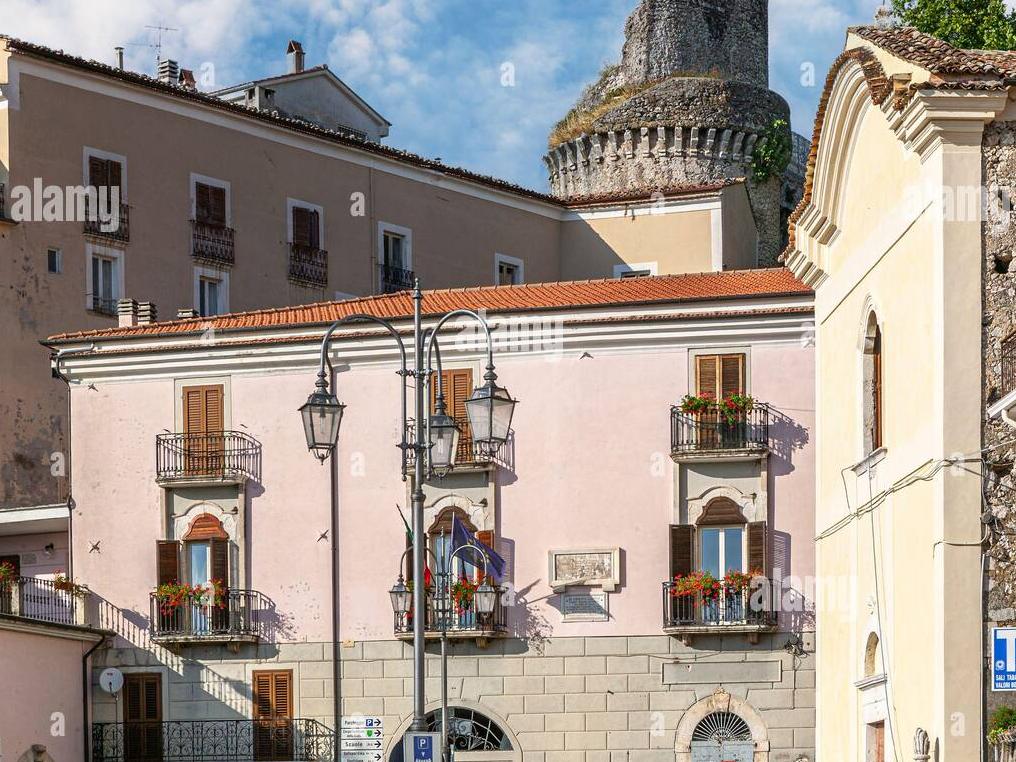
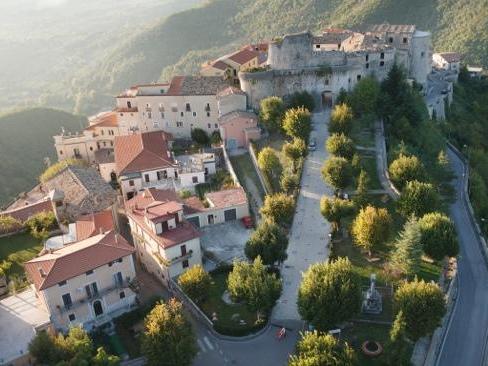
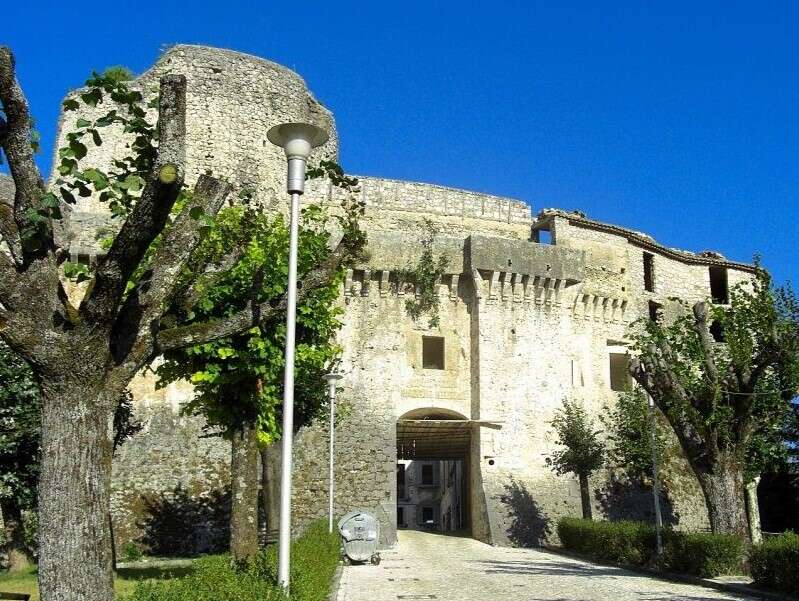
Il castello domina ancora con la sua massiccia mole a pianta rettangolare su tutto il centro storico. A nord-est si affaccia su Valle Romana, attraversata dal fiume Melfa. A sud-est fa bella mostra del suo prospetto principale composto da torri, cortine a scarpa, cammino di ronda, feritoie arciere e archibugiere. Nella rimanente parte è circondato dalle abitazioni del paese. La parte architettonicamente più compromessa è quella del Largo Rione, gravemente colpita da un bombardamento aereo americano nel gennaio del 1944; la torre centrale a corpo cilindrico fu semidistrutta e tuttora versa in queste condizioni.
Il castello ha cinque porte:
Porta della Prece (la porta della preghiera), costruita nel 1711, come si può vedere dalla data impressa sulla chiave di volta dell’arco, dove si trova l’Hotel Sotto Le Stelle;
Porta Saracena situata in Via Porta Saracena. Questo era un tempo l’unico punto di ingresso dalla Val di Comino a Picinisco;
Porta Codarda, situata nella parte nord-ovest delle mura;
Porta Rione, situata a sud-est, accessibile dal Parco Montano. Su entrambi i lati si trovano le torri del castello;
Porta della Piazza, che conduce alla piazza (oggi chiamata Piazza Ernesto Capocci) è costruita nella sua forma attuale nel 1838.
The Castle of Picinisco, together with its defensive walls, clearly reveals from its origins its military function in protecting the north-eastern area of the Comino Valley. Built in 1054 by the two Counts of the Marsi, Oderisio II and Rainaldo III, it later passed to the Counts of Aquino, then to the Cantelmo family, and finally to the Gallio family, who held it until the extinction of their lineage in 1806.
The castle still dominates the entire historic center with its massive rectangular structure. To the north-east it overlooks Valle Romana, crossed by the Melfa River. To the south-east it displays its main façade, characterized by towers, sloping curtain walls, a walkway, archer and arquebus loopholes. The remaining sides are surrounded by the houses of the village. The most architecturally compromised area is that overlooking Largo Rione, which was severely damaged by an American air raid in January 1944; the central cylindrical tower was partially destroyed and remains in this condition today.
The castle has five gates:
- Porta della Prece (the Gate of Prayer), built in 1711, as indicated by the date engraved on the keystone of the arch, near the present-day Hotel Sotto le Stelle;
- Porta Saracena, located along Via Porta Saracena, once the only access point to Picinisco from the Comino Valley;
- Porta Codarda, situated in the north-western section of the walls;
- Porta Rione, located to the south-east and accessible from the Montano Park, flanked on both sides by castle towers;
- Porta della Piazza, leading to the main square (now Piazza Ernesto Capocci), built in its current form in 1838.