Galleria Eustachio Pisani - Isola del Liri
(English version below)
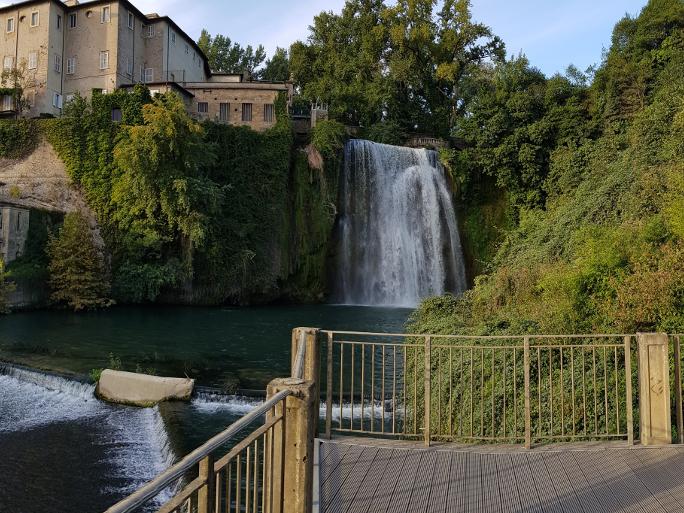
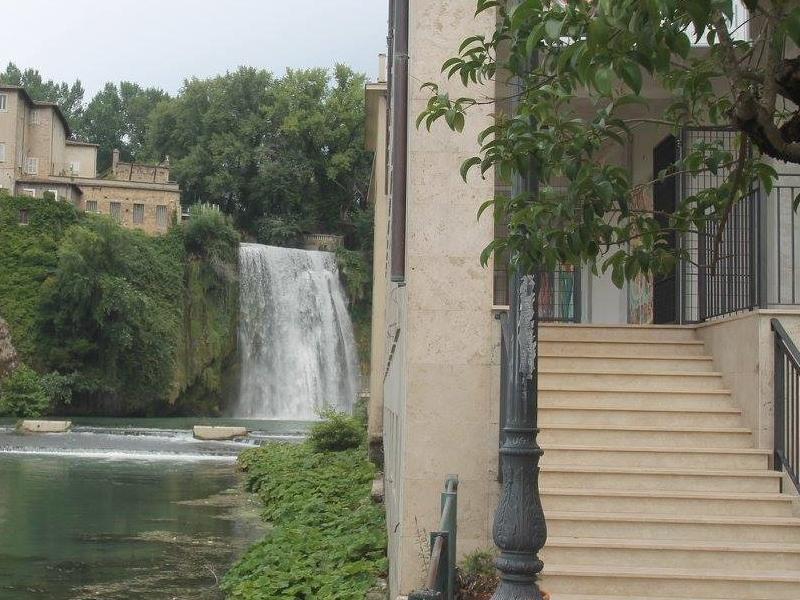
La Galleria Eustachio Pisani è una passeggiata pedonale con affaccio sul fiume Liri che si apre sul terrazzo di fronte alla Cascata Grande, regalando una vista spettacolare ed unica della stessa.
Si trova all'interno dell’ex feltrificio Pisani ad Isola del Liri, lungo gli argini del fiume Liri con ingresso in Piazza XX Settembre. Nel 1840 i fratelli Ippolito stabilirono un lanificio oltre il Ponte di Regno, quasi a ridosso della cascata Verticale. Il basso edificio occupò un sito fino ad allora adibito a orto comunale e ben presto comincio a crescere sia in termini di produttività che di cubatura, tanto da diventare un edificio fortemente impattante sul paesaggio circostante. La svolta decisiva si ebbe quando Eustachio Pisani, tecnico cartareo qualificato ne assunse nel 1896 la direzione dimostrando grandi capacità imprenditoriali. Sotto la sua direzione lo stabilimento passò da 560 mq fino agli 11.000 mq., iniziando a produrre feltri per le cartiere. L’impatto visivo dello stabilimento sul paesaggio circostante era certamente sconcertante. D’atro canto in un periodo di crisi lavorativa come quella di inizio ‘900 è facilmente immaginabile come l’impiego di molti cittadini rappresentasse una legittima priorità rispetto alle tematiche paesaggistiche. La seconda guerra mondiale causò danni al feltrificio di Eustachio Pisani, che si rimboccò le maniche per risollevarne le sorti fino alla sua scomparsa nel 1947. A proseguire l’avventura imprenditoriale fu il figlio Francesco (1899-1963) sotto la cui guida il feltrificio conobbe un ulteriore ampliamento. Lo stabilimento di feltri venne poi trasferito in via dell’Industria. La grande struttura a ridosso della cascata fu fatta oggetto di un interessante piano di conversione che prevedeva negozi e appartamenti ad uso abitativo da parte dell’amministrazione guidata dal Senatore Bruno Magliocchetti. Dopo i primi lavori eseguiti e i diversi passaggi di proprietà, giace da molti anni purtroppo incompiuto, in uno degli scorci più suggestivi d’Italia. A colmare tale situazione, seppur in modo parziale, è giunta la realizzazione nel 2016 della Galleria dedicata ad Eustachio Pisani.
The Eustachio Pisani Gallery is a pedestrian walkway overlooking the Liri River that opens onto the terrace facing the Grande Waterfall, offering a spectacular and unique view of it.
It is located inside the former Pisani felt factory in Isola del Liri, along the banks of the Liri River, with an entrance from Piazza XX Settembre. In 1840, the Ippolito brothers established a wool mill beyond the Ponte di Regno, almost adjacent to the Vertical Waterfall. The low building occupied a site that until then had been used as a municipal vegetable garden and soon began to grow both in productivity and in volume, becoming a structure with a strong impact on the surrounding landscape.
The decisive turning point came in 1896, when Eustachio Pisani, a highly qualified paper-making technician, took over the management of the factory, demonstrating remarkable entrepreneurial skills. Under his leadership, the plant expanded from 560 square meters to 11,000 square meters and began producing felts for paper mills. The visual impact of the factory on the surrounding landscape was certainly striking. On the other hand, in a period of labor crisis such as the early 1900s, it is easy to understand how providing employment for many citizens represented a legitimate priority over landscape concerns.
The Second World War caused damage to Eustachio Pisani’s felt factory, but he worked tirelessly to restore its fortunes until his death in 1947. The entrepreneurial venture was then continued by his son Francesco (1899–1963), under whose guidance the factory underwent further expansion. The felt production plant was later relocated to Via dell’Industria.
The large structure adjacent to the waterfall became the subject of an interesting redevelopment plan promoted by the municipal administration led by Senator Bruno Magliocchetti, which envisaged shops and residential apartments. After the initial works and several changes of ownership, the complex has unfortunately remained unfinished for many years, despite being located in one of the most evocative settings in Italy. Partially addressing this situation was the construction, in 2016, of the gallery dedicated to Eustachio Pisani.