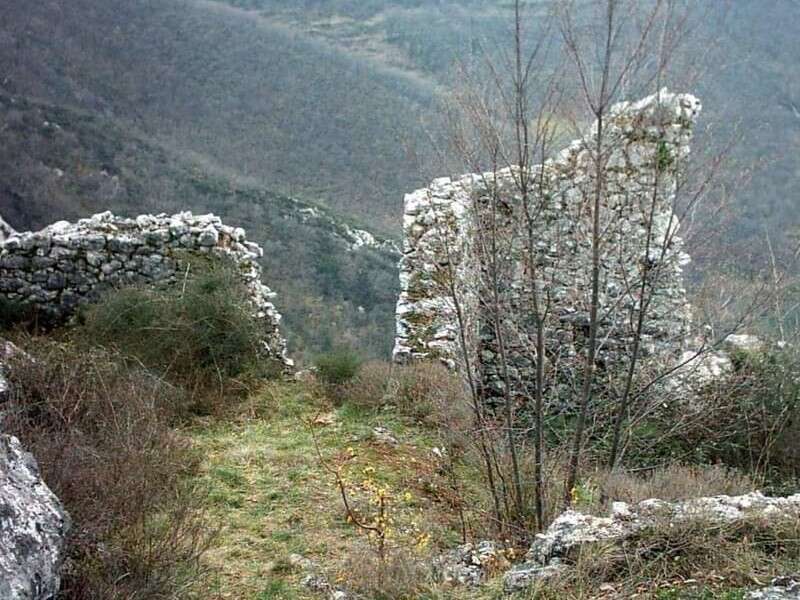
Rocca Malacucchiara
(English version below)
Villa Latina si sviluppò attorno ad uno dei due castelli costruiti nel 1056 d. C. dai Signori di Atina .
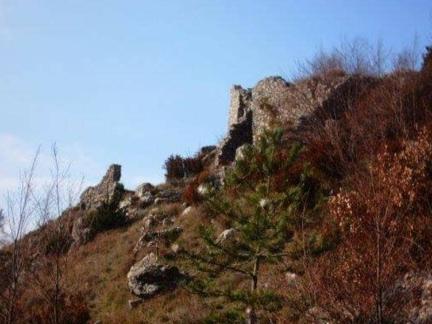
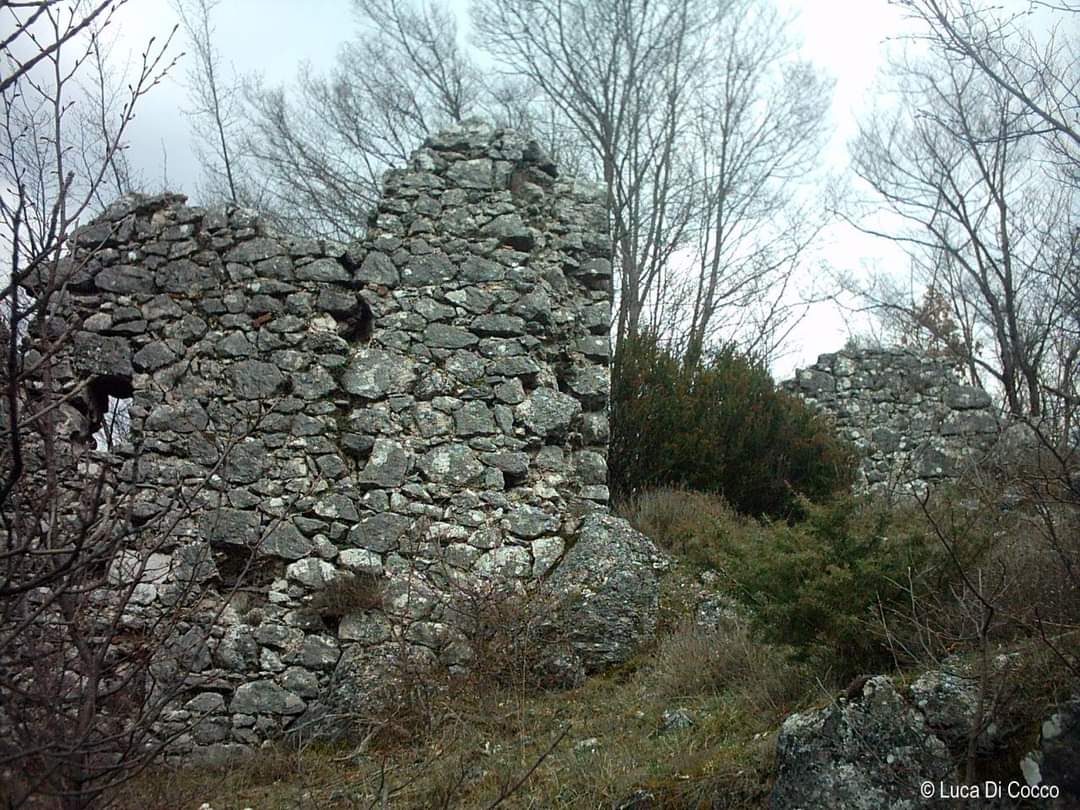
Il secondo castello è identificato con i resti della Rocca Malacucchiara: insediamento d'altura fortificato, successivamente, dai Conti D'Aquino; distrutto nella metà del XV secolo da Riccio di Montechiaro, barone aragonese, nel corso delle lotte di successione tra Angioini e Aragonesi che avevano possedimenti, anche, in Valle di Comino.
I resti dell'antico abitato medievale ,noto con il nome di Rocca Malacucchiara o come lo definiscono gli abitanti "Agnone vecchio" , sono conservati su una sporgenza collinare a nord del Monte La Rocca a 750 m slm.
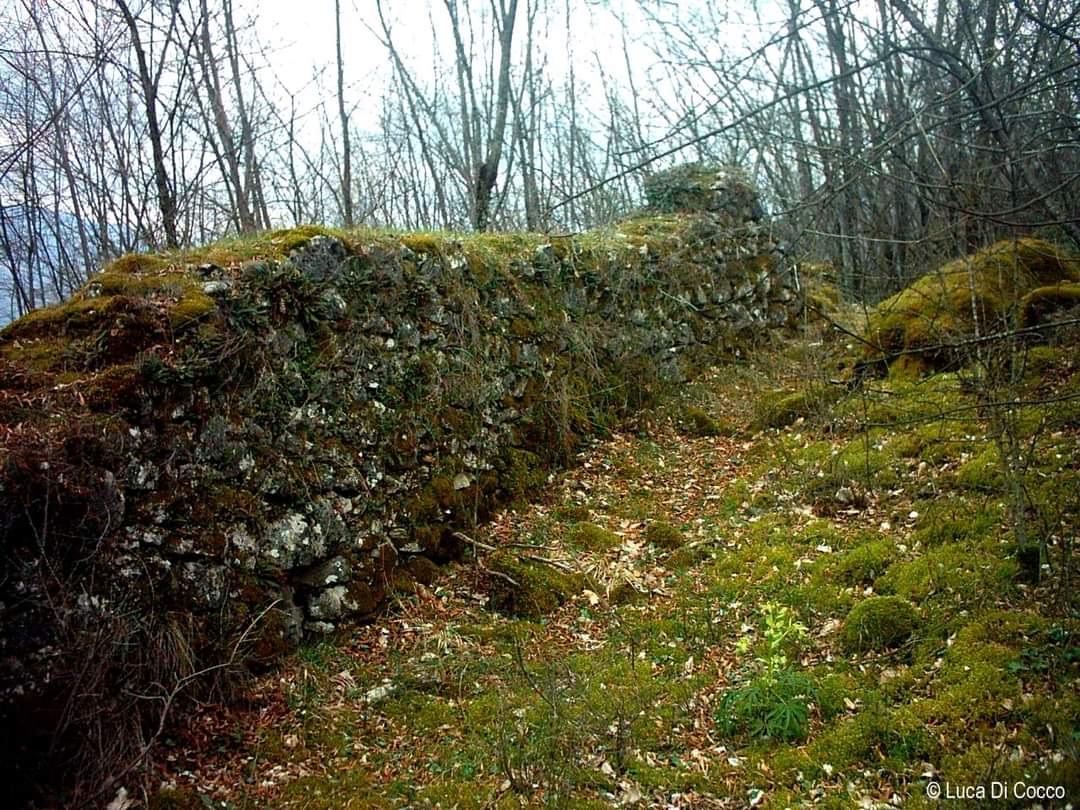
Il sito ha un perimetro esterno corrispondente alle mura di fortificazione di circa 350 m e copre una superficie di circa 8000 mq.
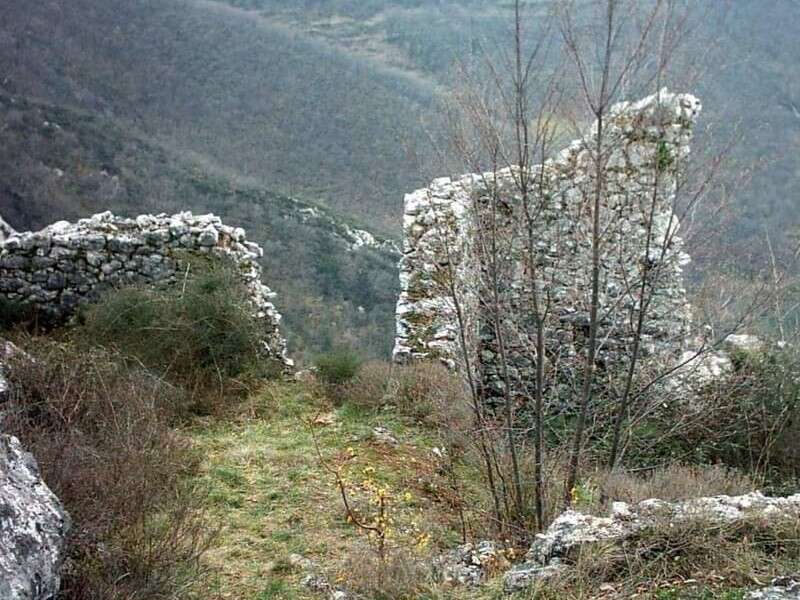
L'area è densamente occupata da una quarantina di abitazioni, una chiesa, una torre ed almeno una cisterna.
Può essere considerato un vero e proprio sito archeologico a cielo aperto.
Villa Latina developed around one of the two castles built in 1056 AD by the Lords of Atina.
The second castle is identified with the remains of the Rocca Malacucchiara, a fortified hilltop settlement later strengthened by the Counts of Aquino and destroyed in the mid-15th century by Riccio di Montechiaro, an Aragonese baron, during the succession struggles between the Angevins and the Aragonese, who also held possessions in the Comino Valley.
The second castle is identified with the remains of the Rocca Malacucchiara, a fortified hilltop settlement later strengthened by the Counts of Aquino and destroyed in the mid-15th century by Riccio di Montechiaro, an Aragonese baron, during the succession struggles between the Angevins and the Aragonese, who also held possessions in the Comino Valley.
The remains of the ancient medieval settlement, known as Rocca Malacucchiara or, as the locals call it, “Agnone Vecchio,” are preserved on a hilly spur north of Monte La Rocca at an altitude of 750 meters above sea level.
The site has an outer perimeter corresponding to the fortification walls of about 350 meters and covers an area of approximately 8,000 square meters.
The site has an outer perimeter corresponding to the fortification walls of about 350 meters and covers an area of approximately 8,000 square meters.
The area is densely occupied by around forty dwellings, a church, a tower, and at least one cistern.
It can be considered a true open-air archaeological site.
It can be considered a true open-air archaeological site.