Civitavecchia di Arpino
(English version below)
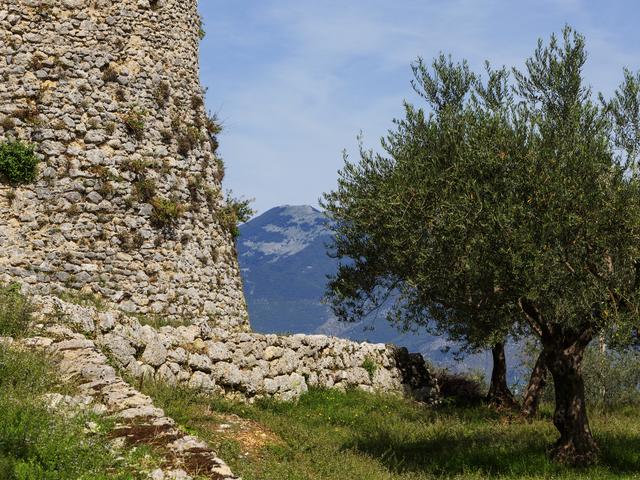
L'Acropoli di Arpino è un sito archeologico prossimo al centro abitato di Arpino, uno dei più importanti per la conoscenza dell'architettura megalitica del Lazio meridionale, non solo per la grande estensione delle mura ma anche per la loro vetustà, maggiore di quella di altri siti (collocabile secondo alcuni in piena età del ferro, VIII/VII secolo a.C.), e classificabili secondo la scala ideata da Giuseppe Lugli nella seconda maniera.
La civitas vetus della città, tipico esempio di fortificazione volsca, rappresenta una delle cinte murarie meglio conservate costruite in opera poligonale in epoca preromana. Essa fu, probabilmente, il nucleo originario del primitivo insediamento volsco (popolo del VII-VI sec. a.C.).
Di particolare significatività è la presenza di un "arco a sesto acuto" unico sopravvissuto nel suo genere in tutta l'area mediterranea.
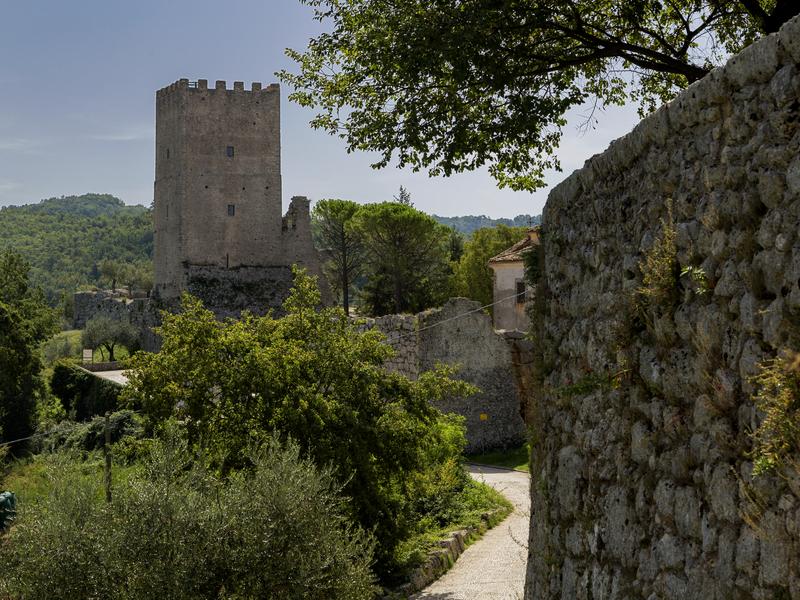
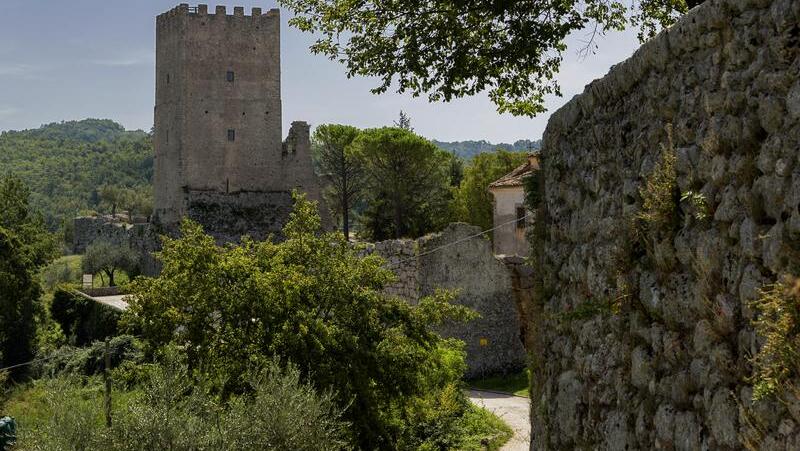
La Torre è un edificio di forma quadrangolare che misura 16 metri per lato, protetto da un muro a scarpa sulla parte sud-orientale.
La facciata decorata da feritoie e aperture più larghe conduce al piano mediano, dove si trova quella che sembra essere l’architrave di un camino, e al piano superiore, in cui vi è un attacco angolare a volta.
Si ritiene che la costruzione della torre e il rinnovamento del castrum sia avvenuta durante i primi anni dell’epoca angioina (1250-60), in seguito alla distruzione della città sul colle inferiore della contrada Falconara.
Al piano nobile è stata allestita una sezione didattica che illustra la storia del monumento e del territorio, le sue mura ciclopiche, le vicende cittadine e le figure più rappresentative della storia e dell’arte.
The Acropolis of Arpino is an archaeological site located near the town center of Arpino and is one of the most important sites for understanding megalithic architecture in southern Lazio. Its significance lies not only in the vast extent of its walls but also in their age, which is greater than that of other sites—some scholars date them to the early Iron Age (8th–7th century BCE). According to Giuseppe Lugli’s classification, the walls belong to the second category.
The civitas vetus, a typical example of Volscian fortification, is one of the best-preserved polygonal masonry walls from the pre-Roman period. It was likely the original nucleus of the primitive Volscian settlement (7th–6th century BCE). Particularly notable is the presence of a unique pointed arch, the only one of its kind to survive in the entire Mediterranean area.
The Tower is a quadrangular building measuring 16 meters per side, protected by a sloping wall on the southeast side. The façade, decorated with narrow slits and wider openings, leads to the middle floor, where what appears to be a fireplace lintel can be seen, and to the upper floor, which features a vaulted corner attachment.
The tower and the renovation of the castrum are believed to date to the early Angevin period (1250–1260), following the destruction of the lower city on the Falconara hill.
On the main floor, a didactic section has been set up, illustrating the history of the monument and the surrounding territory, its cyclopean walls, the city’s historical events, and the most prominent figures in local art and history.